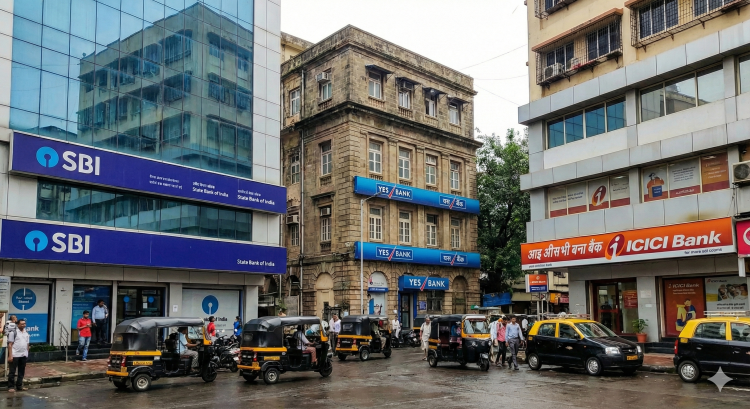
For organisations with a wide physical footprint—banks with hundreds of branches, retailers with distributed outlets, educational groups with multiple campuses, logistics firms with multiple warehouses or co-working spaces —accessing renewable energy has historically been impossible. While a single large factory can opt for an offsite Open Access solar farm, smaller distributed units often lack the scale or roof space to make individual solar installations viable.
Group Net Metering (GNM) is a regulatory evolution that allows a single solar plant to offset electricity bills across multiple locations. Conceptually similar to a shared virtual power plant, it enables smaller consumers to buy renewable energy through closed power networks under current Indian Electricity Regulations.
How Group Net Metering Works
Group Net Metering is a billing arrangement that enables a consumer to pool energy production.

It works through a tiered settlement process:
- On-site Consumption – Electricity generated by the solar plant is first used to meet the immediate demand of the “supplier” (host) site (e.g., a central warehouse or regional office). Typically at least 20% of the generated energy must be consumed at this location.
- Surplus Export – Any excess energy is exported to the grid through a bi-directional Net Meter.
- Virtual Credit Allocation – The exported surplus is converted into energy credits (kWh). These credits are then virtually adjusted against the monthly bills of other “participating sites” within the same DISCOM territory.
- Allocation Mix Pre-decided – Organisations define what percentage of generated energy is applied to specific sites. This is typically done at the beginning of the financial year with a notice period (e.g., 2 months in Karnataka) to prioritise sites with higher tariffs and maximise savings.
- Time of Day (ToD) Settlement – For ToD customers, settlement is done on a zone-to-zone basis (e.g., peak generation offsets peak consumption), and typically no banking of energy is allowed beyond the billing cycle.
Group Net Metering Structure & Eligibility
Implementing a GNM model requires a coordinated approach across legal, technical, and regulatory functions:
1. Legal & Identity Consolidation
- Same Entity Requirement – All participating connections must be under the same legal name and consumer category (e.g., all categorised as “Commercial” under one bank’s name).
2. Technical Feasibility & Grouping
- Supplier Site Selection – Identify “supplier” sites with high solar potential and roof stability.
- Supplier Site Capacity – The supplier site may have restrictions depending on the state. Eg: in Delhi the supplier site must have a Contract Demand (CD) of more than 100 kVA.
- Project Sizing
- Minimum Capacity – Varies but ranges from 1-5 kWp.
- Maximum Capacity – Varies by state; in Karnataka and UP, it is the sum of CD of all connections, whereas in Delhi, it is capped at 5x the sanctioned load of participating consumers, up to a maximum of 10 MW.
- Infrastructure – Supplier sites must install a generation meter, and all participating consumer ends require Smart Meters to track real-time data.
- Transformer Constraints – DISCOMs typically limit total solar capacity on a single distribution transformer to 75–80% of its capacity on a “first come, first served” basis.
3. Regulatory Filing & Application
- Fees – Formal applications require a processing fee. In Delhi, a non-refundable fee of ₹1,000 is mandatory. Statewide, other fees may range from ₹250 to ₹15,000 depending on the state and sanctioned load.
Benefits for Stakeholders
- Sustainability Office – Directly reduces Scope 2 emissions by greening the power supply of remote, small-scale sites.
- CFOs – Offsets expensive grid power (e.g., ₹9/unit) with cheaper solar credits. It prevents capital leakage where surplus solar at one branch is sold back to the utility at low rates (e.g., ₹2/unit) while other branches pay full commercial tariffs.
- Facility Managers – Centralises maintenance by managing one large system (e.g., 500kW on a central warehouse) rather than dozens of micro-installations (e.g., 10kW at each retail outlet).
Adoption Across India
Regional maturity varies significantly. Delhi remains a frontrunner with established 2019 guidelines and recent 2025 amendments. Karnataka recently notified its regulations in 2024, while Telangana unveiled major reforms in late 2025 to standardise these models.

The Neufin Edge
Neufin provides a complete hardware & software offering to remove the friction of multi-site implementation.
- Portfolio Audit – We identify the optimal host/supplier and participating site combinations to yield the highest IRR.
- Regulatory Navigation – We manage DISCOM applications and same name compliance across different jurisdictions.
- OpEx Solutions – We offer OpEx models that allow for GNM adoption without upfront CapEx.
- Lumen Software – Our energy tracking software helps track daily / monthly progress and generation / consumption across both supplier and participating sites.
If you would you like our team to run a preliminary GNM feasibility audit for your top consumption sites in Delhi, Bengaluru or UP please reach out to us.